You collect the sample. Gus does the rest.
Print the Gus-made lab form, turn it in with the sample, and let Gus handle the busywork: track what needs collecting, prepare the paperwork, connect the lab, download results, chart trends, compare treatment options, show cost context, and keep the follow-up tied to the right animal and pasture.
Gus tells you what needs collecting
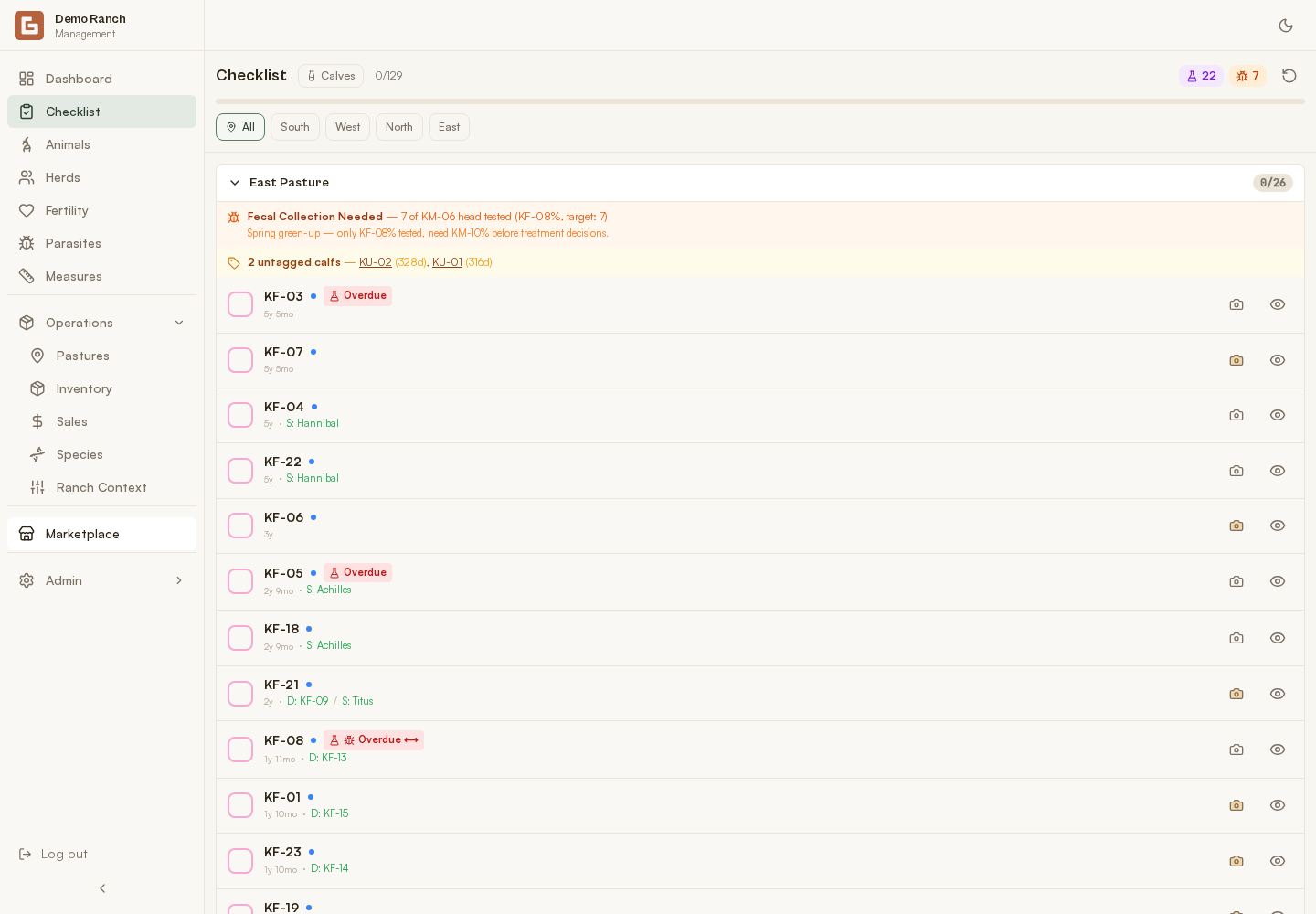
The checklist shows which pastures and animals need fecal samples, which animals are overdue, and where baseline coverage is missing. Ranch teams work from the list instead of trying to remember every sample window.
Lab forms are ready when the sample is
When samples are collected, Gus keeps the lab workflow moving. The dashboard shows samples due, recent fecal collections, and TVMDL parasitology forms ready to print — no re-keying, no hunting for the right template.
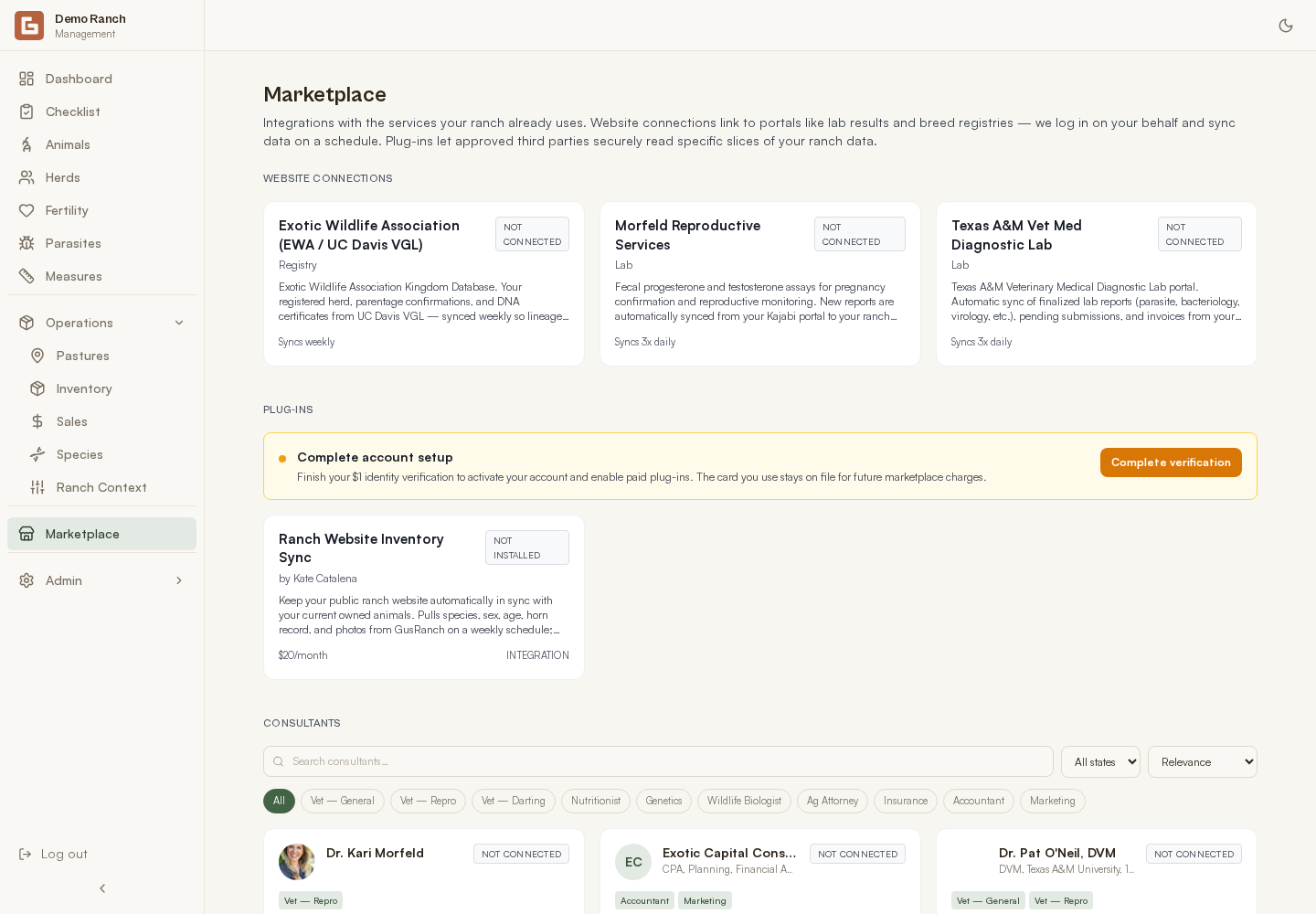
Turn on TVMDL in the marketplace
Gus connects to the lab services your ranch already uses. The TVMDL marketplace connection is built to sync finalized parasite reports, pending submissions, and invoices from the lab portal on a schedule — so you stop logging in to download PDFs.
Every animal keeps its own parasite history
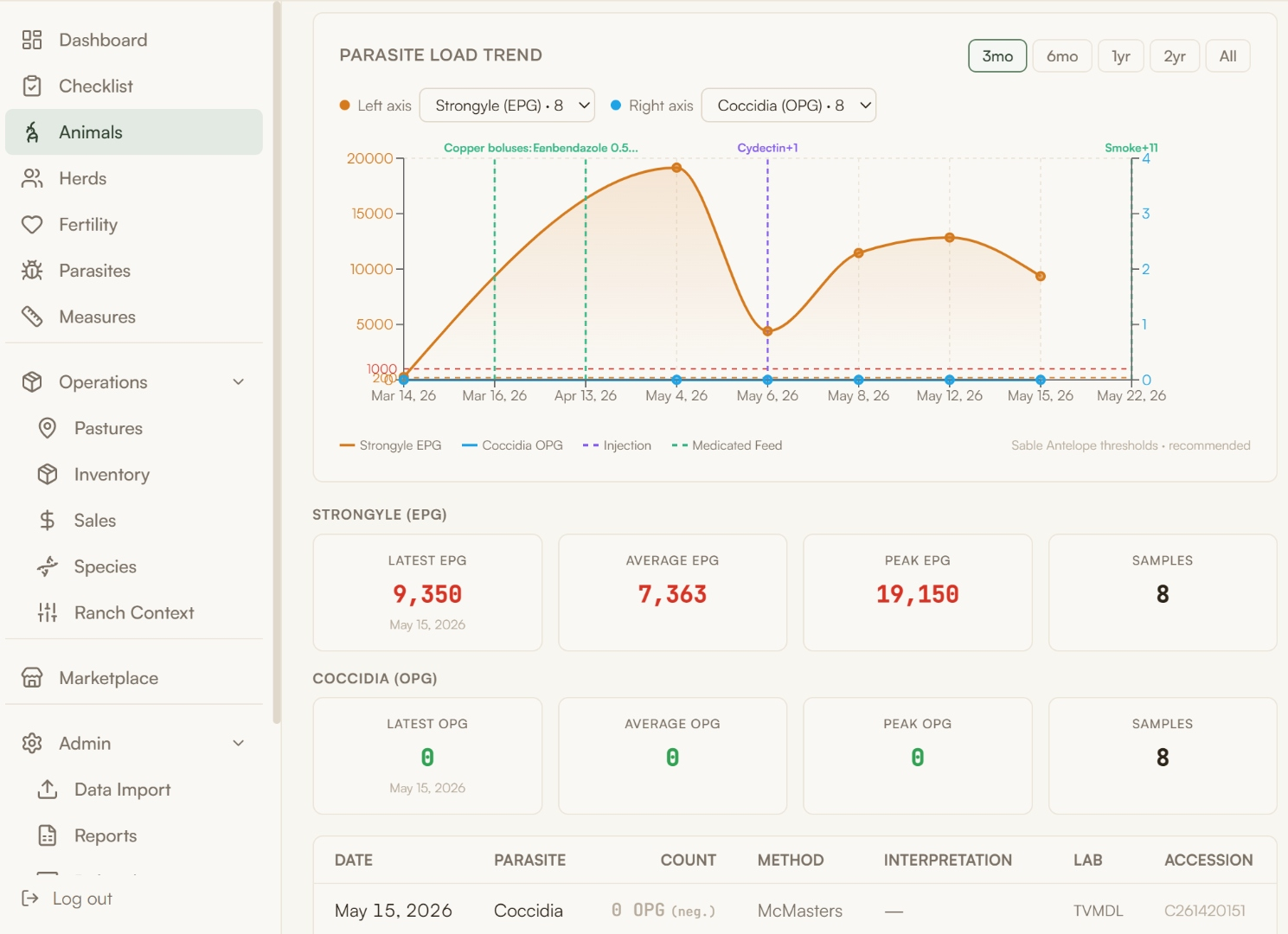
Results come back into the right animal record automatically. Gus tracks individual parasite load over time — latest EPG, average EPG, peak EPG, sample count, method, and interpretation — so you can see whether an animal is improving, spiking, or needs follow-up.
Pasture pressure becomes obvious
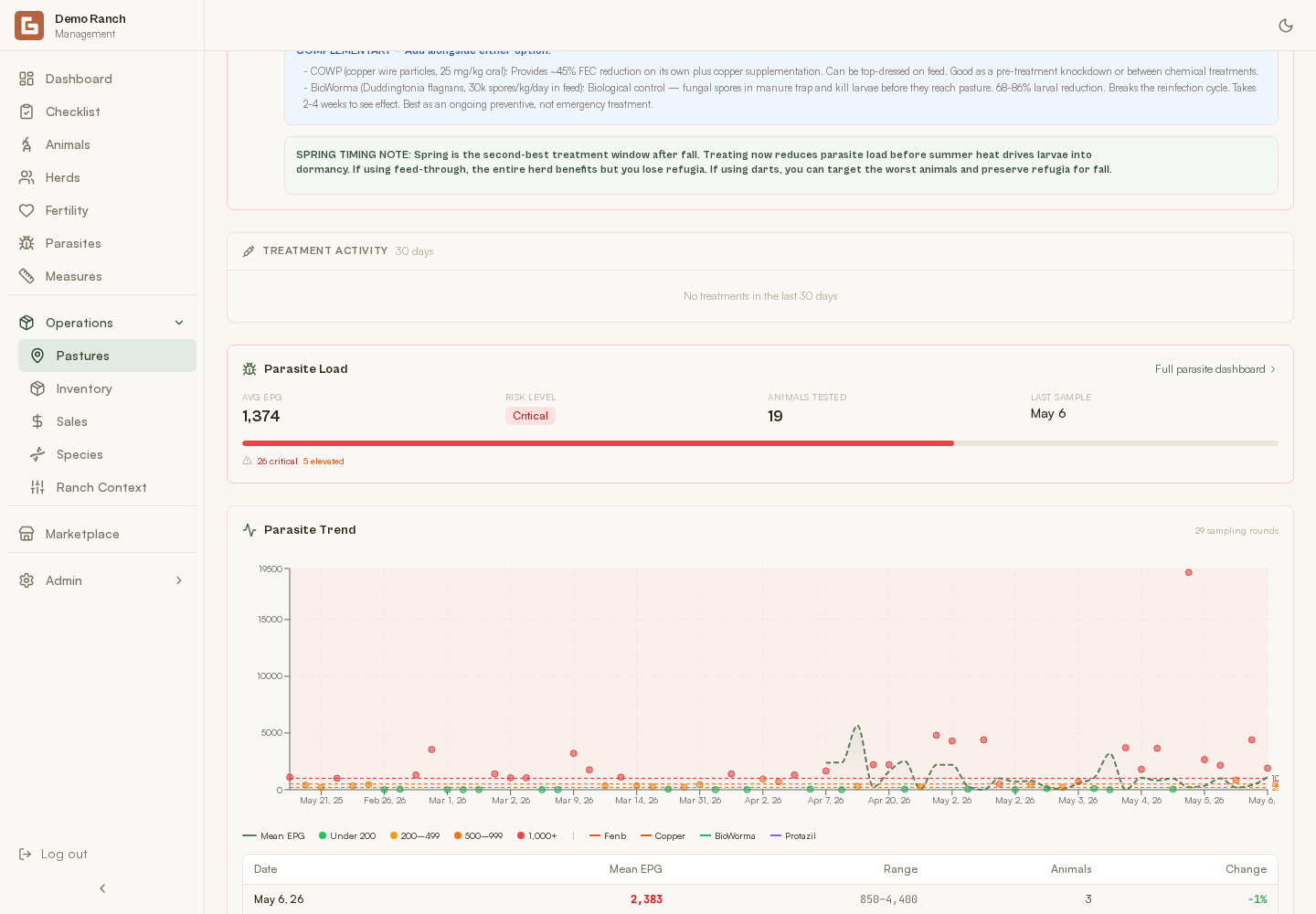
Gus rolls individual results into pasture-level trends, then overlays treatments like fenbendazole, copper, BioWorma, and Protazil on the same timeline. You can see what happened before and after treatment instead of guessing from separate notes.
Gus shows the treatment and the cost together
Gus turns parasite results into practical treatment options with dose math, route, inventory status, pasture impact, and estimated cost on the same screen. Ranchers can compare targeted treatment against whole-pasture treatment without jumping between the lab report, inventory log, vet notes, and a calculator.
All you do is collect the sample.
Gus makes the form, keeps the lab connection ready, downloads the results, files them to the right animal, updates pasture and individual trends, overlays treatments, recommends next steps, shows inventory and cost, and keeps follow-up from getting lost. You print the Gus-made form, turn it in, and get back to running the ranch.
$1 identity verification at signup. No per animal or monthly platform fees.